
Spirulina & Phycocyanin: 3.5 billion years of light, the queen of proteins, and how to spot the real thing
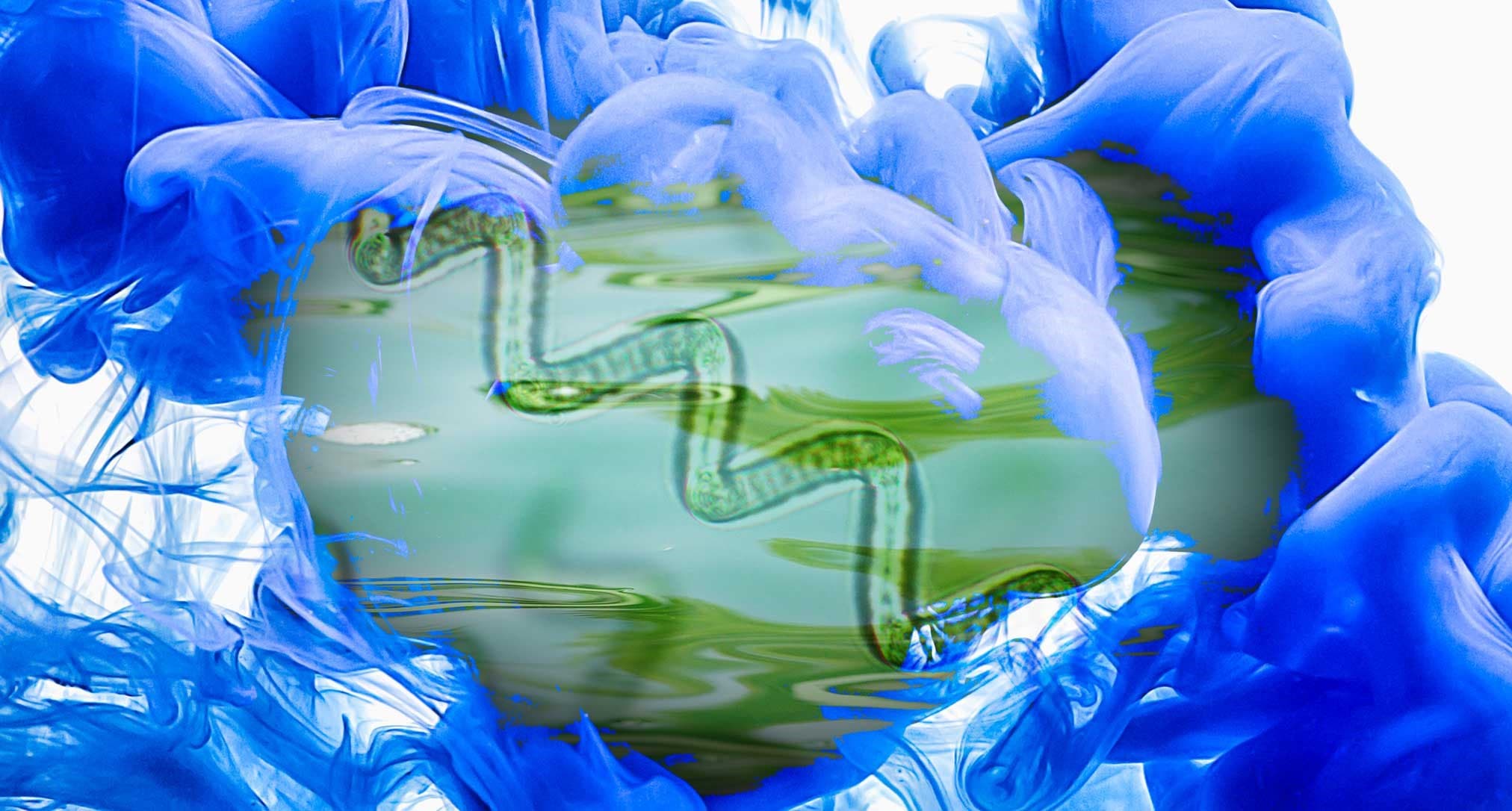
The organism that created our atmosphere
3.5 billion years ago, there was no oxygen on Earth. No plants, no animals, no soil. Earth was a world of rock, water and volcanic gas.
And it was spirulina — a microscopic cyanobacterium — that changed everything. Through photosynthesis, it gradually released oxygen into the atmosphere over hundreds of millions of years, making possible all the complex life that followed. This is the "Great Oxidation Event" — 2.4 billion years ago.
Spirulina is literally the ancestor of breathing. Every breath we take right now is possible because of it.
It still lives today in hot alkaline lakes — Chad, Mexico, Rift Valley — waters where almost nothing else grows. The Aztecs harvested it as tecuitlatl. The Kanembu of Chad still harvest it today as dihé — filtering it from the lake surface and sun-drying it. This is not a supplement invented by industry. It's an ancestral food.
An unforgettable detail: flamingos are pink because of it. It's the phycocyanin and carotenoids from the spirulina they eat that give them their color.
The absolute queen of proteins
No food on Earth rivals spirulina in nutritional density. The numbers are almost absurd.
60 to 70% complete protein by dry weight — more than meat (25%), fish (20%), soy (35%), lentils (25%). More than any other known food. And these proteins contain all 8 essential amino acids in near-ideal proportions.
Digestibility is 85 to 95% — far superior to conventional plant proteins (legumes: 60-70%). Why? Because spirulina has no rigid cellulosic cell wall like plants. Its wall is made of soft polysaccharides, easily degraded by our digestive enzymes. The body doesn't have to strain — it absorbs it directly.
Iron: 50 to 100 times more bioavailable than spinach, gram for gram. And in organic form, far better absorbed than iron from conventional supplements. For women, athletes, plant-based eaters: it's the most efficient iron source in nature.
Beta-carotene: 10 to 30 times more than carrots, in natural form (isomer mix), more bioavailable than the synthetic form.
Gamma-linolenic acid (GLA): a rare anti-inflammatory omega-6 otherwise found mainly in breast milk. Spirulina is one of the most concentrated dietary sources.
That's why it's called the queen. Not by marketing — by biochemistry.
Vibrational scale of spirulina
BU — Bovis units
Phycocyanin: the blue jewel
Phycocyanin is a pigment-protein that gives spirulina its blue-green color. It's the only blue pigment of natural origin approved as a food colorant. But reducing it to a colorant would miss the point entirely.
It's a light-harvesting protein. Inside the spirulina cell, it forms molecular antennas that capture light at wavelengths chlorophyll alone cannot absorb — orange and red. It then transfers this energy with an efficiency above 95%. It's a photonic relay of quantum precision, 3.5 billion years old.
Antioxidant: power estimated at 20 times that of vitamin C and 16 times that of vitamin E. Phycocyanobilin — its chromophore — inhibits NADPH oxidase, the key enzyme in free radical production.
Anti-inflammatory: it selectively inhibits COX-2 — the same enzyme targeted by ibuprofen — but without gastrointestinal side effects.
Neuroprotective: protection against neuronal oxidative stress. And here's what sends a shiver down the spine — phycocyanobilin is the structural twin of bilirubin, the pigment our own liver produces to protect us. Same molecular solution, invented twice, billions of years apart, for the same fundamental problem: transforming light into life without burning.
Erythropoiesis stimulant: it increases EPO and red blood cell production — combined with spirulina's rich iron content, it's an unmatched blood regeneration duo.
The blue glow test: how to spot the real thing
Here's what few labels reveal: the majority of spirulina sold commercially has been depleted. Its phycocyanin — the most precious compound — has been extracted and sold separately as food coloring or a premium supplement. What remains is spirulina "emptied" of its jewel.
The test is simple. Let's take our spirulina powder or flakes. A spoonful in a glass of cold water. A few minutes of patience.
If the spirulina is intact and truly raw, magnificent blue-turquoise glows appear and diffuse into the water — that's the phycocyanin being released, intact and alive. The water takes on a deep blue-green, almost fluorescent hue.
If nothing blue appears — only green — the spirulina has been either heated (phycocyanin is heat-sensitive) or industrially depleted. The body will get protein, yes — but not the jewel.
It's the same principle as for cacao: raw means intact. Intact means alive. Heat destroys the most precious compounds — enzymes, phycocyanin, antioxidants. Spirulina dried at high heat is to raw spirulina what roasted cacao is to raw Criollo: a ghost of the original.
At Virgile Health, we use pure concentrated phycocyanin — not diluted spirulina powder. The pigment is cold-extracted and integrated into our formulations at a significant dose. The blue glow is guaranteed.
In our bars: the light dimension
Our Vanille & Spiruline Bleue bar is built around phycocyanin. Not a sprinkle — an engineer's dose.
The adaptogens in our other bars (ashwagandha, rhodiola, brahmi) work on stress resilience and cognitive performance. Phycocyanin works at a more fundamental level — that of the cellular terrain: each cell's ability to produce energy cleanly, defend against chronic inflammation, and regenerate its components. Combined with spirulina's rich iron and protein content, it's a formula of complete regeneration.
It's bound by Bourbon vanilla and raw Criollo cacao butter, enveloped in Hautes Corbières honey harvested by Emma Cowley (Nature & Progrès beekeeper) — macadamia, ashwagandha, silk lucuma, coconut milk complete the formula.
When we eat this bar, we are literally ingesting organized light — the same light that made every breath on this planet possible. This is not a metaphor. It's biochemistry.